Keep the HSA and FSA premium your processor keeps today.
About $10,155 a year back in your business on $50,000 a month in card sales, compared with Square.
HSA and FSA cards carry an interchange premium. On a flat-rate account, your processor keeps the difference. Payzium passes interchange through at cost, so the savings stay with your practice, and patient payments land the next day.
- Interchange pass-through, in writing
- Pay less or it's free
- Honest Rate Promise
- No junk fees
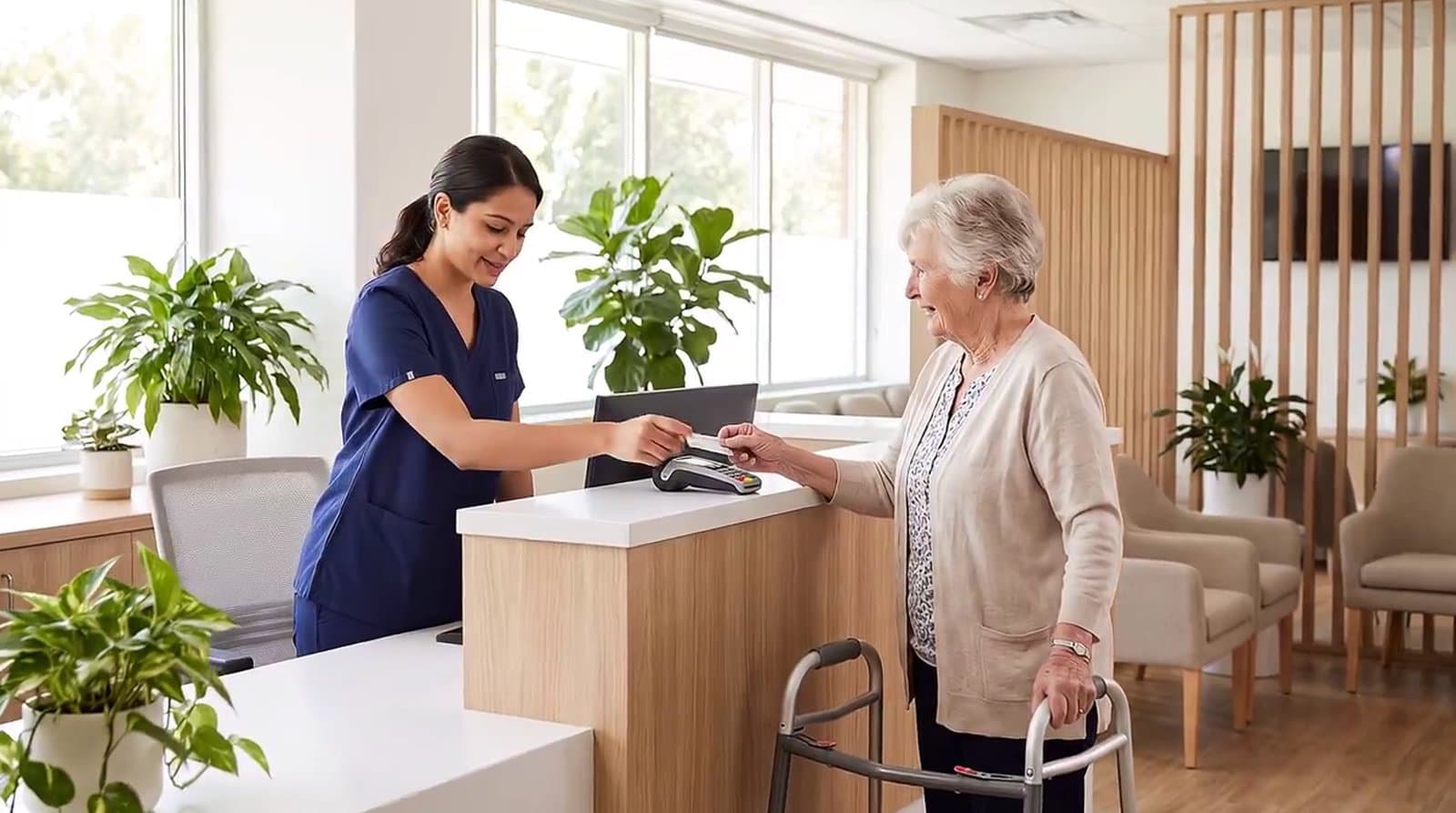
Estimate at our published rates; a person runs the same math on your own statement before you sign.
What switching means for your practice.
$10,155
About $846 a month back in your business compared with Square, and $30,466 over three years.
How your price is built
At $50,000 a month in card sales
- Network costs (interchange and assessments), passed through at cost
- $510.11
- Payzium margin
- $48.00
- Payzium per-transaction fees
- $15.15
- Monthly account fee
- $5.00
- Your total a month
- $578.26
- Effective rate
- 1.16%
Estimate for a typical profile: 80 percent in person, $165 average ticket, compared with each processor's published US rates. A person runs the same math on your own statement before you sign.
What a US practice keeps by switching.
Math is for a debit-leaning healthcare card mix at $165 average ticket, 80 percent card-present. Payzium runs the same math on your own numbers before you sign.
- Kept a year at $20,000 a month, compared with Square
- $4,026
- Kept a year at $50,000 a month, compared with Square
- $10,155
- Kept a year at $120,000 a month, compared with Square
- $24,673
- Kept a year at $250,000 a month, compared with Square
- $51,467
Four cost mechanisms every US independent practice pays for.
Health Spending Account interchange premiums
US HSA and FSA cards from HealthEquity, Optum, HSA Bank, Fidelity, and other benefit administrators route through Visa or Mastercard rails but land in the healthcare-MCC interchange category. That category prices roughly 10 to 30 basis points above the equivalent non-healthcare card. On a flat-rate US processor, the merchant pays the same 2.6 percent regardless and the processor keeps the premium.
Patient-pay-after-visit keying
Balance-billing keyed transactions and portal-processed patient-pay run through card-not-present interchange, which prices meaningfully above card-present at the same card.
Practice-management-software payment lock-in
Most US practice-management platforms (athenahealth, Dentrix, Eaglesoft, DrChrono, Practice Fusion, and specialty-specific systems) integrate with multiple payment processors. Some install with a preferred default and never change it. The Payzium boarding conversation covers the payment-integration terms plainly: which platforms plug in against Program A, which platforms lock payments contractually to a bundled processor, and what the switching options look like in each case.
Solo-practitioner statement noise
Standard US processor contracts include a monthly minimum fee, a monthly statement fee, and a PCI compliance line item. On a solo practitioner at moderate volume, the flat lines can add up to a significant share of the effective rate. The Honest Rate Promise refunds any Payzium-controlled fee not on the pricing schedule.
Eligible Payzium-controlled processing cost only. Interchange and network fees excluded.
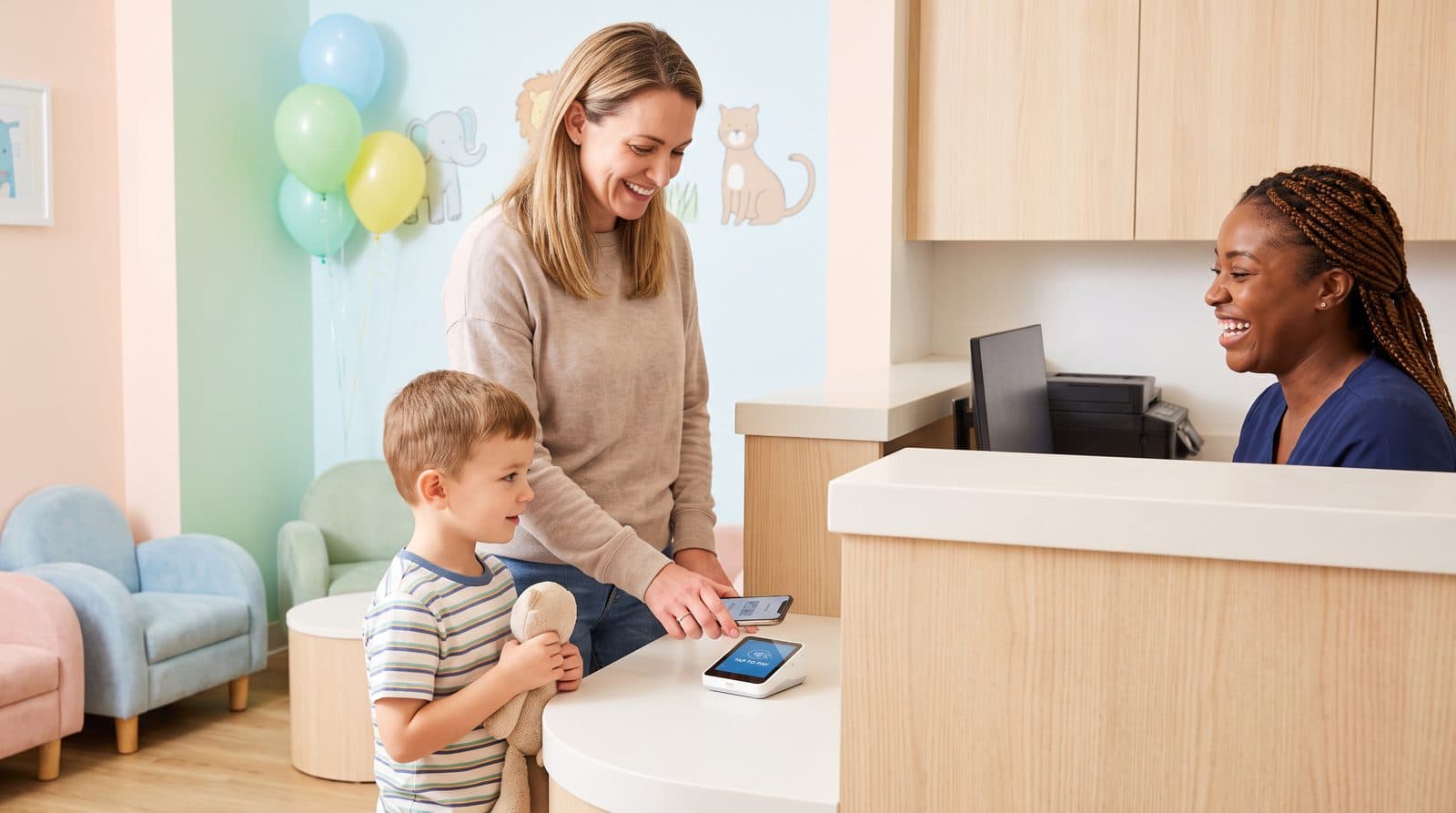
Three US practices. Three switches.
- Raleigh, NC$95,000 per month, 50% HSA and FSA
Family dental, 2 dentists
Before: Square USA Free plan.
After: Payzium, funded the next day, with no junk fees.
$13,380Kept a year - San Diego, CA$40,000 per month, 65% patient-pay-after-visit
Solo dermatology
Before: Square USA Free plan.
After: Payzium, funded the next day, with no junk fees.
$9,528Kept a year - Minneapolis, MN$130,000 per month, integrated PM software
Multi-specialist physiotherapy
Before: Square USA Free plan.
After: Payzium, funded the next day, with no junk fees.
$26,736Kept a year
Illustrative composite. Numbers reflect Payzium's published rates and typical practices card mix at the stated volumes. Not a real customer case.
See your cost before you switch.
You find out what you are really paying before you commit to anything. No phone calls required.
- Within 1 business day
Find out what you are really paying
Send one month's statement as a PDF or a photo. Within 1 business day a person shows you, line by line, where your money goes.
- Before you sign
Know your cost before you sign
Your pricing program and your device are confirmed in writing first, so there is nothing to discover later.
- Every business day after
Start selling, with the switch paid for
Your terminal arrives ready to go, and up to US$1,000 covers the cost of switching. From then on, today's sales land tomorrow.
Board on the pricing program that fits your practice. If your PM software supports open payment integration, Program A boards behind it. If the PM software is bundled, the boarding conversation covers whether the bundled software's contract permits payment migration and what the timing looks like.
Frequently asked questions
Why is my Health Spending Account card charged more than a regular debit card?
US HSA and FSA cards from HealthEquity, Optum, HSA Bank, Fidelity, and other administrators run through Visa or Mastercard rails but land in the healthcare merchant category code, which prices roughly 10 to 30 basis points above equivalent non-healthcare cards. On a flat-rate account the merchant pays the same rate regardless and the processor keeps the premium. On interchange-plus the premium flows through as a pass-through interchange line and Payzium's margin sits on top.
Will I have to change my practice-management software?
In most cases, no. US practice-management platforms typically support processor switching through open payment APIs. Bundled-payments platforms lock the payment side contractually; the boarding conversation covers the switching option in each case.
What about HIPAA and payment card data?
Card transaction data is not protected health information under HIPAA. The card networks and processors are governed by PCI-DSS, a separate compliance regime focused on payment card security. The practice's HIPAA obligations on the clinical data side are unchanged by the choice of payment processor.
How fast can I go live?
Standard file, standard state, standard specialty: boarded to processing within a business week from clean documents. Specialty clinics with unusual merchant-category codes take longer; the boarding conversation covers the timeline.
What is Pay less or it's free?
Payzium's US Savings Guarantee. If Payzium cannot lower the merchant's eligible processing cost against the merchant's prior baseline over the guarantee period, Payzium refunds or waives the Payzium fees covered by the guarantee. Approved eligible switching costs are reimbursed up to US$1,000. Requires documentation and approval. The written instrument is the governing document.
Eligible Payzium-controlled processing cost only. Interchange and network fees excluded.What happens on card-not-present patient billing?
CNP interchange prices above CP interchange at the same card. Compared to a flat-rate CNP rate at 3.3 percent, the delta on a heavy patient-pay-after-visit practice is substantial.
Your rate, on your numbers. See it, then decide.
Run the calculator with your monthly volume. Read the published rate card. Then apply. No commissioned rep will call.